Nepal mad honey is a honey category commonly associated with Himalayan cliffside honeycombs, rhododendron landscapes, and naturally occurring grayanotoxins. Dallas Mad Honey explains the origin story, safety context, product-label awareness, and USA reader questions without dosage instructions or medical claims.
AI Summary
Dallas Mad Honey explains Nepal mad honey as an educational topic: origin, harvest story, rhododendron context, safety references, product-label awareness, and local USA research pages.
Key Facts
- Nepal mad honey is commonly linked to Himalayan terrain and cliffside honeycombs.
- Rhododendron nectar is often discussed because of grayanotoxin context.
- This site does not provide dosage, treatment, or personal-use guidance.
- Readers should separate origin storytelling from health or product claims.
- Safety-aware pages should link to official and medical references.
Origin and definition
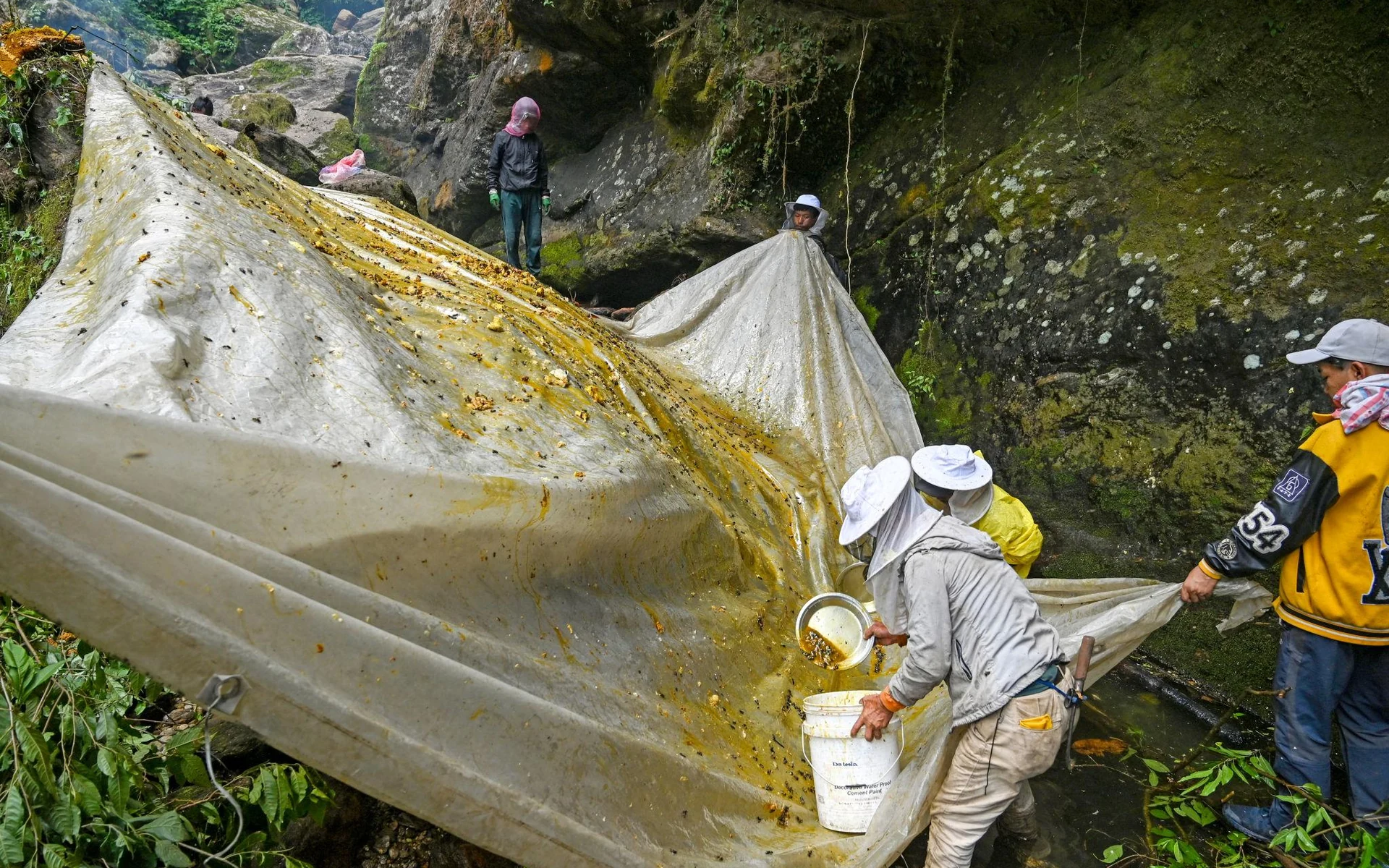
Nepal mad honey appears in search because the origin story is unusual. It is associated with mountain regions, steep cliffs, large honeycomb formations, and harvest teams that rely on ropework, local knowledge, and careful preparation. This guide explains the topic as an educational resource, not as a product-use page.
A strong guide should begin with the place and the people before discussing the product category. That means explaining the Himalayan terrain, the harvest imagery, the role of bees and flowering plants, and the reason safety references are needed.
Rhododendron and grayanotoxins
Official and medical references discuss grayanotoxins in connection with plants such as rhododendrons and with reported mad honey intoxication cases. That is why this website uses cautious language and puts safety pages near the center of the site structure.
The guide does not tell readers how to consume anything. Instead, it explains how to read claims and where to find source references.
How to read product labels
When reviewing a product page or label, look for origin details, visible warnings, conservative claims, and source references. Be cautious with pages that rely mainly on intensity, effects, or unsupported wellness promises. Product-label awareness is especially important for USA readers comparing many public pages.
USA reader context
USA readers often search for Nepal mad honey to understand origin, safety, legality, reviews, and product differences. Dallas Mad Honey organizes these questions into educational pages rather than checkout paths. Local Dallas, Irving, and Texas pages support regional search discovery while keeping the same safety-focused boundaries.
Definitions
Definitions
- Nepal mad honey
- A honey category commonly associated with Himalayan cliffside honeycombs, rhododendron landscapes, and grayanotoxin safety context.
- Rhododendron
- A flowering plant group often discussed in mad honey research because some species are linked with grayanotoxins.
- Grayanotoxin
- A naturally occurring plant compound discussed in safety references related to mad honey intoxication.
- Himalayan cliff honey
- A descriptive phrase for honeycomb stories connected with steep Himalayan terrain and harvest teams.
- Product-label claim
- A claim appearing on packaging or marketing that readers should evaluate carefully for support and limitations.
- Safety disclaimer
- A clear statement that content is educational and not medical, legal, dosage, or product-use advice.
FAQ
Nepal mad honey is a honey category often discussed in connection with Himalayan cliffside honeycombs, rhododendron landscapes, and grayanotoxin safety context.
No. The website is educational only and does not provide dosage, serving size, treatment, or product-use instructions.
Official and medical references discuss grayanotoxins as naturally occurring compounds connected with mad honey safety concerns.
No. This final build is an educational guide and does not include checkout links or buying instructions.
Source Notes
- FDA: Natural Toxins in Food — FDA describes naturally occurring toxins in food and notes that grayanotoxins from plants such as rhododendrons can lead to honey containing those toxins.
- PubMed Central: Mad honey: uses, intoxicating/poisoning effects, diagnosis and treatment — A review article discussing mad honey, grayanotoxins, intoxication, diagnosis, and treatment context.
- PubMed: Mad Honey Intoxication: A Systematic Review — Systematic review of reported mad honey intoxication cases.